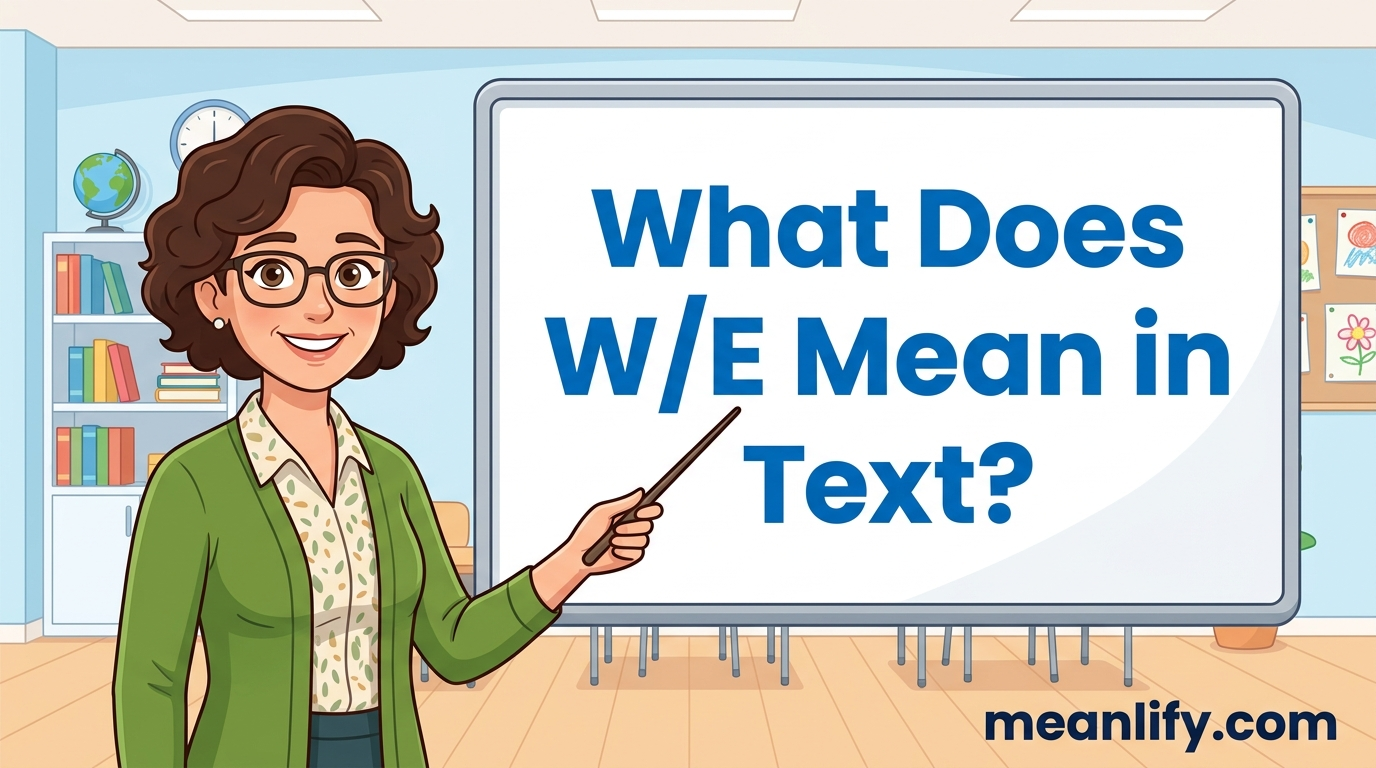
Have you ever received a message like “w/e works for me” or “do w/e you want” and wondered what the sender meant? In most text conversations, W/E means “whatever.” It is a quick, informal abbreviation people use when they do not have a strong preference, want to leave a choice open, or simply do not want to type the full word. However, tone matters. A friendly “w/e is easiest for you” can sound relaxed and flexible, while a cold “w/e” after an argument may feel dismissive or annoyed.
In some conversations, W/E can also mean “weekend,” so the surrounding words are important. This guide explains the meaning, tone, examples, social media use, and the best ways to reply without misunderstanding the message.
What Does W/E Mean in Texting?
In texting and internet slang, W/E usually stands for “whatever.” The letter W represents “what,” while E represents “ever.” The slash separates the two shortened parts.
People may write it in several ways:
- w/e
- W/E
- we
- w.e.
- wtv
Among these, “w/e” is easy to recognise because the slash shows that the writer has shortened a word or phrase. Dictionary and slang references commonly list “whatever” as its main internet meaning, although “weekend” is another accepted meaning in the right context.
The abbreviation is casual. You are more likely to see it in a message, gaming chat, comment, or group conversation than in a formal email.
Here is a simple example:
A: What should we watch tonight?
B: W/e you like.
In this message, the second person is saying, “Whatever you like.” They are giving the other person freedom to choose.
The Simple Meaning of W/E
The easiest way to understand W/E is:
W/E = Whatever
Depending on the sentence, “whatever” can express different ideas. It may mean:
- Any option is acceptable.
- The choice is not important.
- The sender does not mind.
- The sender has lost interest in the discussion.
- The sender feels irritated and wants to end the topic.
That is why the abbreviation cannot be understood by translation alone. You must also notice the relationship, punctuation, emojis, and previous messages.
For example:
“We can eat w/e you want 😊”
This sounds friendly and flexible.
Now compare it with:
“W/e.”
This short reply may sound rude, impatient, or emotionally distant, especially during a disagreement.
The letters are the same, but the emotional meaning is different.
Is W/E Rude?
W/E is not automatically rude, but it can easily sound rude.
The main problem is that text messages do not include facial expressions or voice. When someone says “whatever” in person, you can hear whether they are joking, tired, calm, or angry. In a message, readers must guess.
W/E may sound harmless when it is part of a complete, helpful sentence:
“Choose w/e time is best for you.”
This message shows flexibility.
It may sound dismissive when it appears alone:
“W/e.”
A full stop can make it feel even colder. It may suggest, “I do not care,” “I am done talking,” or “Believe what you want.”
Emojis can soften it:
“W/e 😂”
This may sound playful.
But emojis do not always remove the risk of misunderstanding. If the conversation is serious, writing the full phrase is often safer.
W/E Meaning “Weekend”
Although “whatever” is the most common meaning in casual text conversations, W/E can also mean “weekend.” Dictionaries and abbreviation references record both uses.
The sentence usually makes the correct meaning clear.
Example:
“Are you free this w/e?”
Here, “whatever” would not make sense. The sender is asking whether you are free this weekend.
Another example:
“Any plans for the w/e?”
Again, W/E means weekend.
Compare that with:
“Pick w/e colour you like.”
In this sentence, it means whatever.
A quick rule is:
- If W/E appears near words such as this, next, plans, Friday, free, trip, or Saturday, it may mean weekend.
- If it appears near words such as want, choose, works, happens, you say, or you like, it probably means whatever.
Context solves most confusion. Context often reveals the intended meaning very quickly.
W/E Examples in Everyday Texts
Here are natural examples showing how people use W/E in different situations.
When Someone Has No Preference
A: Pizza or burgers?
B: W/e is fine.
Meaning: Either option is acceptable.
When Giving Someone Freedom to Choose
A: What time should I come?
B: W/e time suits you.
Meaning: Choose any convenient time.
When Someone Feels Annoyed
A: I still think I was right.
B: W/e.
Meaning: The sender may be ending the argument rather than agreeing.
When Someone Is Being Playful
A: You definitely cheated in that game.
B: W/e 😂
Meaning: The sender is probably joking or pretending not to care.
When Talking About the Weekend
A: What are you doing this w/e?
B: Probably staying home.
Meaning: W/E stands for weekend.
When Discussing a Flexible Plan
A: Should I send the file as PDF or Word?
B: W/e is easier.
Meaning: Either format is acceptable.
These examples show why reading the entire sentence is more useful than focusing only on the abbreviation.
What Does W/E Mean on Snapchat?
On Snapchat, W/E normally means whatever. It may appear in a snap caption, direct message, or reply to a story.
Example:
“We can go w/e you want.”
The sender is letting the other person choose.
A short Snapchat reply such as “w/e” may also show boredom or irritation. Because Snapchat conversations are often fast and informal, users may expect the other person to understand the mood from previous snaps, emojis, or inside jokes.
W/E can mean weekend on Snapchat too:
“Party this w/e?”
Here, it clearly refers to the weekend.
What Does W/E Mean on Instagram?
On Instagram, W/E may appear in comments, captions, notes, or DMs.
In a DM, someone might write:
“Send me w/e photos you like.”
This means any photos are acceptable.
In a comment, a person might write:
“W/e, she still looks amazing.”
Here, it can mean “whatever” in a dismissive or confident way. The user may be ignoring criticism or refusing to continue an argument.
In an Instagram Note, someone could post:
“Need plans for the w/e.”
In that case, it means weekend.
The platform does not change the basic definition. The sentence and mood decide the meaning.
What Does W/E Mean on TikTok?
TikTok users may use W/E in comments, captions, or private messages. It usually stands for whatever.
Example:
“People can say w/e, this song is good.”
The writer means that other people can say whatever they want.
Another example:
“Wear w/e makes you comfortable.”
This means any comfortable clothing choice is fine.
TikTok language changes quickly, and “wtv” may be more familiar than “w/e” in some communities. Still, both forms can communicate the same basic word.
When W/E appears in a date-related comment such as “dropping this w/e,” it probably means weekend.
What Does W/E Mean on WhatsApp?
On WhatsApp, W/E is common in quick personal and group conversations.
Someone planning dinner might say:
“Order w/e everyone likes.”
The person is open to any suitable choice.
In a work group, someone may write:
“We can meet this w/e if weekdays are busy.”
Here, it means weekend.
Because WhatsApp is used for both personal and professional communication, it is wise to consider the group. Close friends may understand “w/e” immediately, while colleagues or older relatives may find it unclear.
For important plans, writing the full word can prevent confusion.
How Can You Tell Which Meaning Is Correct?
To understand W/E correctly, ask three simple questions.
1. Is the Conversation About Time or Days?
If the message mentions Friday, Saturday, Sunday, plans, travel, or availability, W/E probably means weekend.
“Are you working this w/e?”
2. Is the Conversation About a Choice?
If someone is selecting food, clothes, times, places, or activities, W/E probably means whatever.
“Choose w/e you prefer.”
3. Is the Message Part of an Argument?
If W/E appears as a one-word response after disagreement, it may mean “whatever” with a dismissive tone.
“W/e.”
You can also look at punctuation and emojis. A smiling emoji may make the phrase warmer. A full stop, eye-roll emoji, or very short reply may make it feel colder.
How to Reply When Someone Says W/E
Your reply should match the situation.
If the person has no preference, make the decision:
“Okay, let’s get pizza.”
If the person means weekend, answer the scheduling question:
“Yes, I’m free on Saturday.”
If the message feels rude, avoid reacting too quickly. You can ask calmly:
“Are you upset, or do you really not mind?”
If the meaning is unclear, ask directly:
“Do you mean whatever or weekend?”
That question may feel simple, but it is better than building an entire argument around a misunderstood abbreviation.
Should You Use W/E in Professional Messages?
It is usually better to avoid W/E in formal communication.
A colleague may understand it, but the abbreviation can look rushed or ambiguous. It may mean whatever, weekend, or another organisation-specific term. In business writing, clarity matters more than saving a few characters.
Instead of:
“W/e date is fine.”
Write:
“Any of the suggested dates works for me.”
Instead of:
“I can finish it this w/e.”
Write:
“I can finish it this weekend.”
Clear wording reduces the risk of confusion and sounds more professional.
Is W/E Still Used?
Yes, W/E is still understood and used, but it is not the only abbreviation for whatever. Some people prefer “wtv,” while others simply write the full word.
Online language depends on age, region, platform, friend group, and personal style. One person may use W/E every day, while another may have never seen it.
That does not make either person wrong. Slang is flexible, and different communities develop different habits.
The safest approach is to read the context. When writing to a broad audience, use the full word. When chatting with friends who understand your style, the abbreviation is usually fine.
Frequently Asked Questions
Does W/E Always Mean Whatever?
No. In most casual text conversations, W/E means whatever, but it can also mean weekend. A sentence about choices usually points to whatever, while a sentence about days or plans usually points to weekend.
What Is the Difference Between W/E and WTV?
Both can mean whatever. W/E separates “what” and “ever” with a slash, while WTV removes several letters from the full word. WTV may feel more familiar in newer social media conversations, but usage varies.
Can W/E Sound Disrespectful?
Yes. A one-word “w/e” can sound dismissive, especially during an argument. A longer sentence such as “w/e works best for you” normally sounds more helpful and flexible.
Final Thoughts
W/E most often means whatever in text messages, but it can also mean weekend. The correct meaning depends on the sentence. When someone writes “choose w/e you like,” they mean whatever. When they ask, “Are you free this w/e?” they mean weekend.
Tone is just as important as definition. W/E can sound relaxed when someone is open to different choices, but it can sound rude when used as a short reply during conflict. Look at the topic, punctuation, emojis, and previous messages before deciding what the sender intended.
When clarity matters, write the full word. A few extra letters can prevent unnecessary confusion.
Discover More Posts
https://meanlify.com/ttyl-mean-in-text/
https://meanlify.com/smh-mean-in-text-from-a-guy/
https://meanlify.com/aka-mean-in-text/

Elara is a passionate author who loves exploring the meaning and nuances of words in everyday life. She writes to make language clear, engaging, and accessible to all readers. At Meanlify, Elara shares insights on modern communication, slang, and expressions, helping readers better understand the evolving world of words.