Have you ever received “TTYL” at the end of a message and wondered whether the person was being friendly, busy, or trying to end the conversation? TTYL is one of the most common texting abbreviations, and it simply means “talk to you later.” People use it when they need to leave a chat but expect to speak again in the future. It can sound casual, warm, polite, or slightly rushed depending on the conversation.
In this guide, you will learn the real meaning of TTYL, how it is used in texts and on social media, what tone it carries, and how you can reply without making the conversation awkward.
What Does TTYL Mean in Text?
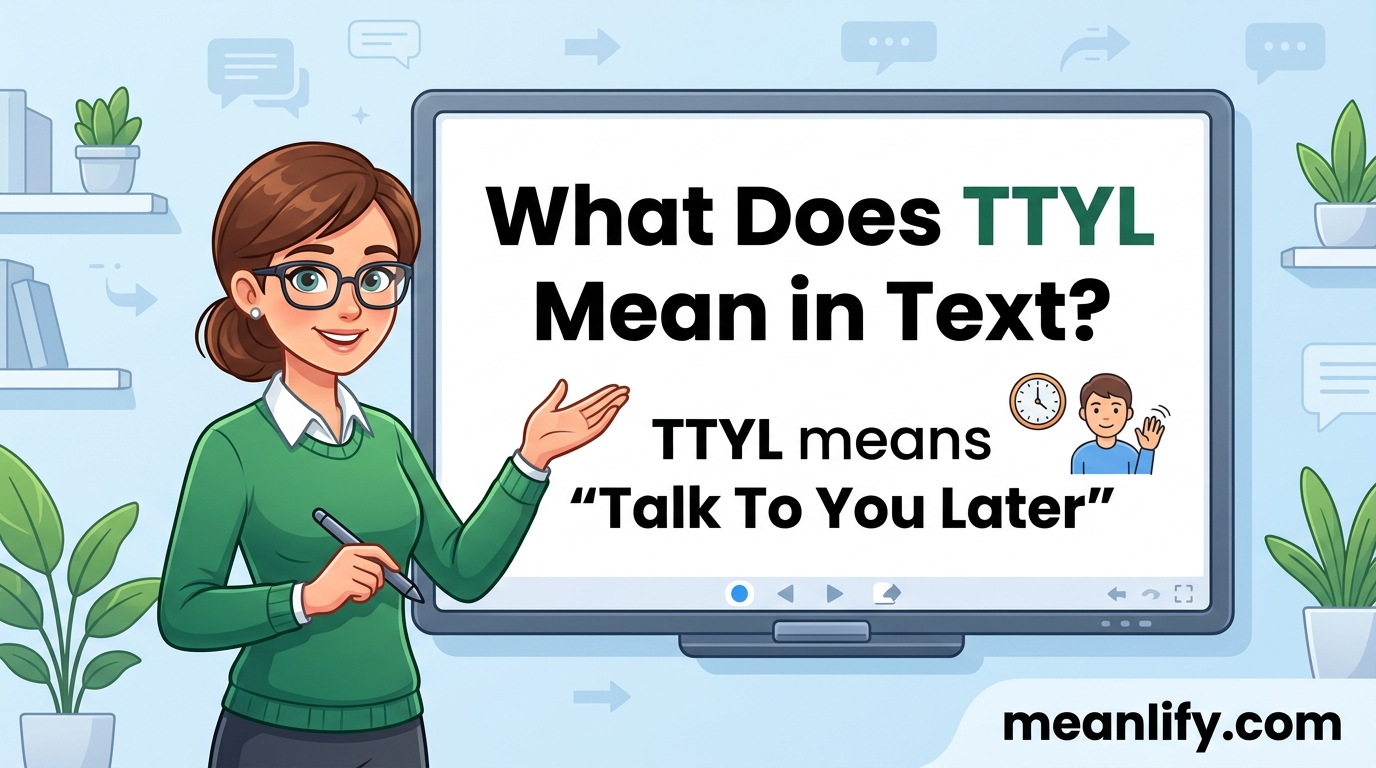
TTYL stands for “talk to you later.” It is a quick way to tell someone that you are ending the current conversation but may speak with them again later.
For example:
“Dinner is ready, TTYL.”
This means the person needs to stop chatting because dinner is ready, but the conversation is not permanently over.
TTYL is usually friendly and informal. It is common between friends, classmates, relatives, coworkers who know each other well, and people talking online. It saves time because typing four letters is faster than writing the full sentence.
The phrase does not promise an exact time. “Later” might mean in an hour, that evening, the next day, or whenever both people are free again. The context usually tells you how soon the person may return.
Why Is TTYL So Common?
TTYL became popular through early chat rooms, instant messaging, and mobile texting, when short abbreviations made typing faster. It belongs to the same family as BRB, LOL, IDK, and OMG.
Modern smartphones make full sentences easy to type, but TTYL remains familiar and useful. Some younger users may prefer “talk later,” “catch you later,” or “I’ll text you,” yet most people still understand the abbreviation immediately. Its lasting appeal is simple: it closes a conversation politely without sounding as final as a plain goodbye.
How TTYL Is Used in Everyday Conversations
TTYL usually appears when someone is ready to leave a conversation. Here are some natural examples.
When Someone Is Busy
“I need to finish this assignment. TTYL.”
The person is pausing the conversation to focus on work.
When Someone Is Going Out
“My ride is here. TTYL!”
The person has to leave immediately but is ending the chat in a friendly way.
When Someone Is Going to Sleep
“I’m so tired. Good night, TTYL.”
In this case, “later” probably means the next day.
When the Phone Battery Is Low
“My battery is at 2%. TTYL.”
The conversation may end because the phone is about to switch off.
After a Friendly Chat
“It was nice catching up. TTYL!”
This feels warm and suggests the person enjoyed the conversation.
During a Quick Work Chat
“I’ll check the file after lunch. TTYL.”
This can work in a relaxed workplace, especially between coworkers who already communicate informally.
Is TTYL Friendly or Rude?
TTYL is normally friendly, but it can sometimes feel rude if it is used too suddenly.
Imagine you send a long emotional message and the other person replies only:
“TTYL.”
Even though the abbreviation itself is not rude, that reply may feel dismissive because it does not acknowledge what you said.
Now compare it with:
“I’m sorry you’re dealing with that. I have to go into a meeting, but TTYL.”
This version feels considerate because the person responds to the message before leaving.
The difference is not the abbreviation. The difference is timing, context, and effort.
TTYL sounds friendly when:
The conversation is already ending naturally.
The person explains why they need to leave.
It is paired with a kind sentence or emoji.
Both people regularly use casual abbreviations.
TTYL may feel cold when:
It appears after a serious question.
It is the only reply to an important message.
The person repeatedly uses it to avoid a conversation.
It is sent during an argument without explanation.
So, do not judge the meaning from four letters alone. Look at the full conversation and the relationship between the people.
What Does TTYL Mean From a Girl or Guy?
When a girl or guy sends TTYL, it usually means exactly what it says: they need to leave and may talk again later. It is not automatically a sign of attraction, rejection, anger, or lost interest.
Look at the words around it:
“Had fun talking to you! TTYL 😊” sounds warm and positive.
“Busy rn, ttyl” sounds quick but practical.
“Whatever. TTYL.” may sound irritated because of “whatever,” not because of the abbreviation itself.
People often overanalyse short messages when they like someone. A better approach is to notice patterns. Does the person restart conversations, ask questions, and seem interested in what you say? Their overall communication style tells you more than one four-letter sign-off.
What Does TTYL Mean on Snapchat, Instagram, TikTok, and WhatsApp?
TTYL means “talk to you later” across Snapchat, Instagram, TikTok, WhatsApp, and other messaging apps. Its meaning still stays the same.
On Snapchat, someone may send it before leaving the app, ending a snap conversation, or going to sleep:
“Going to practice, ttyl.”
On Instagram, it often appears in direct messages or group chats:
“I’ll send you the reel later, TTYL.”
On TikTok, it can appear in messages, comments, live chats, or captions:
“Need to go study, TTYL everyone.”
On WhatsApp, it is common in family, friendship, and casual work chats:
“Client just arrived. TTYL.”
The tone depends on surrounding words, punctuation, and emojis. “TTYL 💕” feels affectionate, while “ttyl.” may seem more serious or rushed. Still, neither version gives an exact return time. The person may message again in minutes, hours, or the next day.
Common Ways People Write TTYL
You may see the abbreviation written in several styles:
TTYL
ttyl
Ttyl
TTYL!
ttyl 😊
Talk to you later
All versions carry the same basic meaning.
Uppercase letters can make the abbreviation easier to notice, but they do not necessarily mean the person is shouting. Lowercase “ttyl” often feels more relaxed and natural in modern texting.
Punctuation changes the tone slightly.
“TTYL!” sounds upbeat.
“TTYL 😊” sounds warm.
“ttyl…” may sound uncertain or disappointed.
“TTYL.” can feel firm, depending on the conversation.
These differences are small, so avoid reading too much into punctuation unless the rest of the message supports that interpretation.
How to Reply to TTYL
A TTYL reply should be short because the other person is leaving.
You can say:
“Okay, talk later!”
“Sure, take care.”
“Bye for now.”
“Catch you later.”
“Alright, message me when you’re free.”
“Sounds good!”
“Good night!”
“See you tomorrow.”
You can also reply with an emoji, such as a wave, smile, heart, or thumbs-up.
The best response depends on the relationship and reason for leaving.
If someone says, “I’m going into an exam, TTYL,” you might reply, “Good luck!”
If someone says, “I’m driving now, TTYL,” you could say, “Drive safely.”
If a close friend says, “I’m exhausted, ttyl,” you could reply, “Rest well.”
There is no need to force a long response. TTYL is a closing message, so a simple reply is usually enough.
TTYL vs BRB
TTYL and BRB are both used when leaving a conversation, but they are not identical.
BRB means “be right back.” It suggests the person expects to return soon, often within a few minutes.
TTYL means “talk to you later.” It is more open-ended and does not suggest a quick return.
Example:
“Someone is at the door, BRB.”
The person may return in a few minutes.
“I have to leave for work, TTYL.”
The person may return hours later.
Use BRB for a short pause. Use TTYL when the conversation is ending for a longer or unknown period.
Can You Use TTYL in Professional Messages?
TTYL can be used in casual professional chats, but it is not ideal for every workplace.
It may be fine when messaging a coworker you know well:
“I’m heading into another meeting. TTYL.”
It may feel too informal when writing to a client, senior manager, professor, recruiter, or someone you have never met.
More professional alternatives include:
“I’ll speak with you later.”
“Let’s continue this discussion tomorrow.”
“I’ll get back to you shortly.”
“I’ll follow up later today.”
“Thank you. We can reconnect next week.”
Choose the wording based on the relationship and communication style of the workplace. When in doubt, use the full phrase rather than the abbreviation.
When You Should Avoid Using TTYL
TTYL is useful, but it does not fit every situation.
Avoid using it when someone has shared serious news and needs a thoughtful response. A quick sign-off may seem uncaring.
It may also be unsuitable in formal emails, customer complaints, job applications, academic communication, or sensitive discussions.
For example, if someone says they are upset, do not reply only with “TTYL.” Instead, acknowledge their feelings and explain why you need to leave.
You could write:
“I want to give this the attention it deserves, but I have to go right now. Can we talk later tonight?”
This is clearer and more respectful.
Is TTYL Still Used in 2026?
Yes, TTYL is still understood and used, although it is not always the trendiest abbreviation. Some people prefer phrases such as “talk later,” “catch you later,” “I’ll text you later,” or simply “bye.”
Younger users may use TTYL less often than people who grew up with early texting and instant messaging. Still, its meaning is familiar across age groups, and it remains useful when you want a quick, friendly sign-off.
Slang changes over time, but simple abbreviations often survive because they are easy to understand. TTYL continues to work because it communicates a common idea in only four letters.
Three Quick Examples of TTYL in Context
Example 1: Friendly
Person A: “Are you free to watch a movie tonight?”
Person B: “Maybe! I need to ask my sister. TTYL.”
Meaning: Person B will leave the chat and may respond later.
Example 2: Busy
Person A: “Can you help me with the notes?”
Person B: “I’m in class right now. TTYL.”
Meaning: Person B cannot continue chatting at the moment.
Example 3: Affectionate
Person A: “Sleep well.”
Person B: “You too ❤️ TTYL tomorrow.”
Meaning: Person B is ending the chat warmly and expects to talk again.
Frequently Asked Questions
Does TTYL Mean Goodbye Forever?
No. TTYL means the conversation is ending temporarily, not permanently. The person expects or hopes to speak again later, although they may not know exactly when.
Can TTYL Be Flirty?
TTYL is not naturally flirty, but it can sound flirty when paired with affectionate words, teasing, hearts, or playful emojis. For example, “TTYL, handsome 😉” carries a different tone from a plain “ttyl.”
What If Someone Says TTYL but Never Messages Again?
They may have become busy, forgotten, expected you to restart the conversation, or lost interest. One message is not enough to know the reason. Look at their communication pattern before making assumptions.
Final Thoughts
TTYL means “talk to you later.” It is a simple, casual way to end a text conversation without making the goodbye feel permanent. People use it when they are busy, tired, going somewhere, or ready to step away from their phone.
The abbreviation is usually friendly, but the surrounding message determines its real tone. A warm sentence or emoji can make it feel caring, while a sudden TTYL during a serious discussion may seem dismissive.
When someone sends it to you, a short reply such as “Okay, talk later” is usually perfect. There is no need to overthink it. In most conversations, TTYL means exactly what it says: the chat is over for now, but another conversation may happen later online.
Discvover More Posts
https://meanlify.com/cx-mean-in-text/
https://meanlify.com/smh-mean-in-text-from-a-guy/

Elizabeth is a content writer and digital researcher at Meanlify.com, a website focused on explaining internet slang, text abbreviations, and social media language. She enjoys breaking down complex online terms into simple and easy meanings so readers can quickly understand modern digital conversations. Through her work at Meanlify, Elizabeth shares clear, accurate, and up-to-date guides about the latest texting slang, internet trends, and online communication.