“OK…” in a text usually means “okay,” but the three dots can add a different tone, such as hesitation, disappointment, awkwardness, or uncertainty. Unlike a simple “OK,” the punctuation may suggest that the person has more to say or is not completely happy with the situation. You may see “OK…” in text messages, TikTok comments, Snapchat, Instagram, WhatsApp, and other social media conversations.
Its meaning depends heavily on the context, the relationship between the people, and what was said before it. Understanding the tone behind those dots can help you tell whether the person is simply agreeing or quietly expressing an emotion.
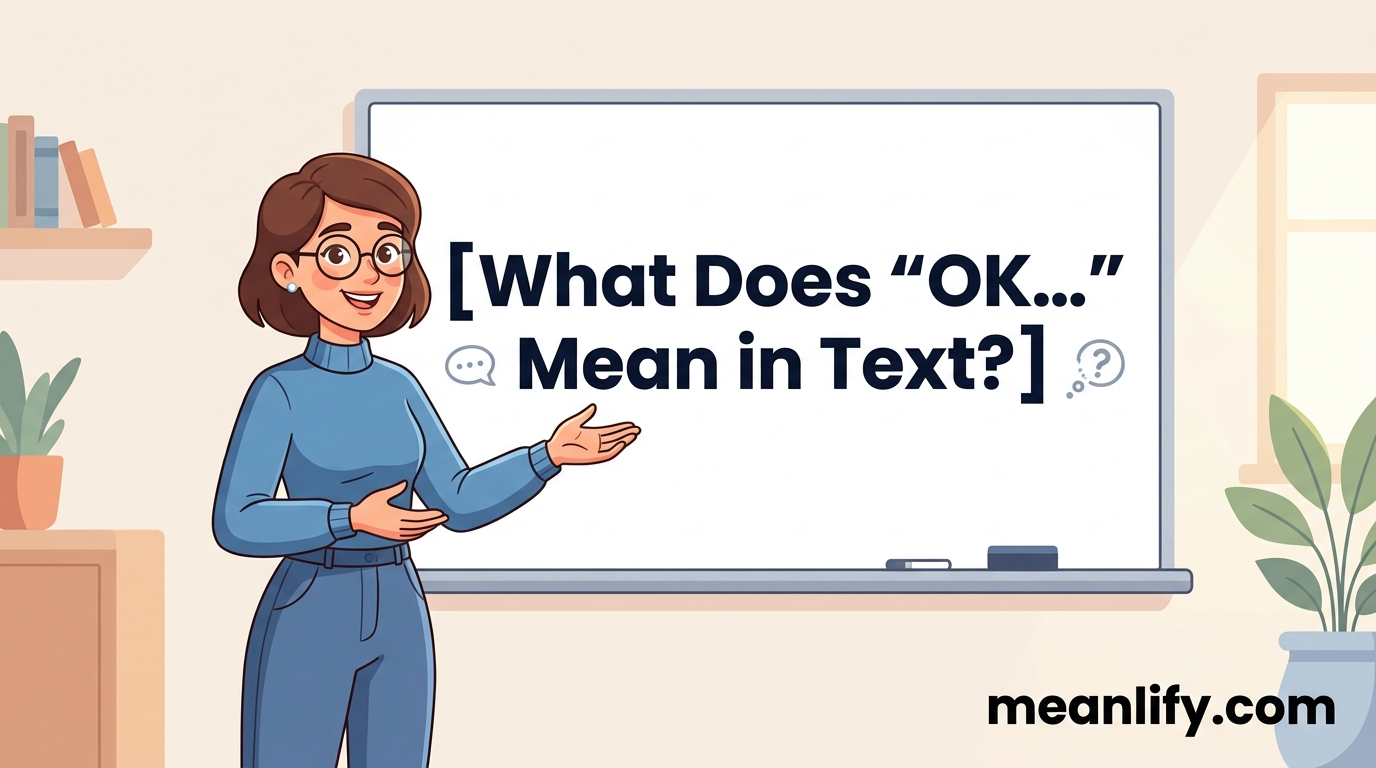
What Does OK… Mean in Text?
In text messages, “OK…” usually means, “I understand, but I have more thoughts or feelings that I am not saying directly.”
The word “OK” confirms agreement, acceptance, or understanding. The three dots after it are called an ellipsis. In casual texting, an ellipsis often makes a message feel unfinished. It can suggest that the person is pausing, thinking, holding something back, or waiting for you to continue.
For example:
You: I cannot come tonight because I made other plans.
Friend: OK…
Here, your friend may understand but still feel disappointed.
Now compare it with this:
You: The doctor said the test may take a few days.
Friend: OK… let me know when you hear something.
In this case, the dots show a thoughtful pause rather than anger.
The phrase does not have one fixed meaning. The dots simply add emotional uncertainty.
The Most Common Meaning of OK…
A common interpretation is reluctant acceptance.
The sender may be saying “fine” without feeling completely fine. They have accepted the information, but their reply suggests that something remains unresolved.
This often happens when a person does not want to argue openly. Instead of explaining their frustration, they send a short answer with dots.
You: I gave your concert ticket to someone else because you replied late.
Them: OK…
The person may not want to start a disagreement, but the reply can still show disappointment.
A plain “OK” is direct. “OK…” creates a pause that makes the reader wonder what the sender is thinking.
Why Do Three Dots Change the Tone?
In face-to-face conversation, people use voice, facial expressions, gestures, and pauses. Texting removes most of those signals, so punctuation often carries emotion.
An ellipsis creates the feeling of silence after a word. It is similar to someone saying “okay” slowly and then stopping.
Compare these versions:
- OK — neutral confirmation
- OK! — positive or friendly
- OK? — asking for confirmation
- OK… — uncertain, hesitant, or unfinished
- OK. — firm, serious, or possibly cold
- Okaaay — playful, doubtful, or teasing
The basic word stays the same, but the mood changes.
Different Meanings of OK…
Hesitation or Uncertainty
The sender may not know how to react.
You: I think I am going to quit my job tomorrow.
Friend: OK… have you thought it through?
The dots show concern. The friend is processing surprising information.
Disappointment
A person may use it when they expected something better.
You: I forgot to buy you a birthday gift.
Partner: OK…
The hidden meaning may be, “I understand, but I am hurt.”
Annoyance
It can be a restrained way of showing irritation.
You: Can we change the meeting time again?
Coworker: OK…
The coworker agrees, but repeated changes may be frustrating them.
Awkwardness
Sometimes the sender simply does not know what else to say.
You: I accidentally sent that message to the family group.
Friend: OK…
This may reflect awkward silence rather than anger.
Suspicion
“OK…” can show that someone does not fully believe an explanation.
You: My phone died, so I could not reply for twelve hours.
Them: OK…
The unspoken message may be, “I hear you, but I am not convinced.”
Waiting for More Information
The sender may feel your story is incomplete.
You: Something strange happened at work.
Friend: OK…
Your friend may be waiting for you to continue.
A Normal Texting Habit
Not every ellipsis carries tension. Some people regularly end messages with dots because it matches the way they type.
Mum: I bought some fruit… it is in the kitchen…
She may not be upset at all. Compare the message with the person’s usual writing style before assuming anything negative.
Is OK… Rude or Passive-Aggressive?
It can be, but not always.
“OK…” may feel passive-aggressive when the sender avoids saying what is wrong while still making their displeasure noticeable. It can pressure the other person to ask, “Are you upset?”
For example:
You: I will go out with my friends instead of visiting you.
Partner: OK…
If the partner is clearly hurt but refuses to explain, the reply may sound passive-aggressive.
Still, it is risky to label every dotted response as rude. The sender may be tired, distracted, nervous, or simply used to typing that way.
Use three clues:
- What happened before the message
- How the person normally texts
- Whether the conversation was already tense
A difficult conversation makes a negative meaning more likely. A relaxed conversation makes a neutral meaning more possible.
What Does OK… Mean From a Girl or Guy?
The meaning does not depend on gender.
From a girl or a guy, “OK…” may show hesitation, disappointment, annoyance, suspicion, emotional distance, or a need for time to think.
If you cancel plans at the last minute and receive “OK…,” the sender may be disappointed. If you share surprising news, they may simply be processing it.
Do not immediately assume the person is angry or losing interest. A calm response works better:
“Your reply sounds a little uncertain. Is everything alright?”
That gives the sender space to explain without feeling accused.
What Does OK… Mean on Social Media?
On WhatsApp
On WhatsApp, it usually has the same meaning as in regular texting. It may show a pause, disappointment, or uncertainty.
On Snapchat
Snapchat conversations are quick and casual. “OK…” can mean that the sender feels awkward, unimpressed, confused, or slightly annoyed.
If it follows a joke, it may be playful sarcasm. If it follows an apology, the person may not have fully accepted the apology.
On Instagram
In Instagram DMs, it may appear after a story reaction, personal question, or discussion about plans.
You: I only replied to your story because I liked the song.
Them: OK…
The reply could sound suspicious, especially if the person thinks you had another reason for messaging.
On TikTok
TikTok users often use “ok…” for humour, disbelief, or dramatic judgement.
Video caption: I drink orange juice after brushing my teeth.
Comment: ok…
The comment means something like, “That is strange, and I do not know how to react.”
Difference Between OK, OK…, and K
These replies are related, but they can feel very different.
OK
Usually neutral and clear. It means the message was received or understood.
Example: “OK, I will call you later.”
OK…
Often uncertain or emotionally loaded. It may suggest hesitation, disappointment, or an unfinished thought.
Example: “OK… I did not expect that.”
K
Very short and casual. Depending on the relationship, it may sound rushed, cold, or dismissive.
Example: “K.”
Okayyy or Okaaay
The stretched spelling may be playful, doubtful, teasing, or sarcastic.
Example: “Okaaay, if you say so.”
Small changes in spelling and punctuation can completely change how a reply feels.
How to Reply When Someone Says OK…
Your answer should match the situation.
If the conversation was emotional, do not ignore the possible tension. Ask gently instead of becoming defensive.
You could say:
- “You sound unsure. Is something bothering you?”
- “I feel like there is more you want to say.”
- “Are we okay?”
- “I did not mean to upset you.”
- “Tell me honestly what you think.”
- “I am here if you want to talk.”
If the topic was simple and the person normally uses dots, you may not need to respond.
Avoid sending an aggressive reply such as “What is your problem?” That can turn a misunderstanding into a real argument.
How to Tell Whether the Sender Is Upset
Look for patterns instead of judging one message.
The sender may be upset if they suddenly switch from warm, detailed messages to short replies. Other clues include delayed responses, no emojis, repeated one-word answers, or a colder tone.
Someone who usually writes:
“Okayyy 😂 sounds good!”
but suddenly replies:
“OK…”
may be signalling a change in mood.
However, people also text differently when they are busy, tired, working, studying, or stressed. One reply is not enough to prove anger.
Respectful communication is more reliable than guessing.
When Should You Avoid Using It?
Avoid “OK…” when clarity matters.
In professional emails, customer support chats, workplace messages, or serious relationship discussions, the dots can create confusion. The reader may wonder whether you are annoyed or disagreeing.
Write a complete response instead:
- “Okay, I understand.”
- “Thanks for letting me know.”
- “That works for me.”
- “I understand, although I have one concern.”
- “I need a little time to think about this.”
Clear words are better than expecting someone to interpret your mood through punctuation.
Common Mistakes People Make
One common mistake is assuming the worst immediately. Someone may start an argument because they believe the dots prove anger.
Another mistake is ignoring obvious context. If you have just cancelled important plans, “OK…” probably deserves more attention than the same reply in a casual chat.
People also forget to consider texting habits. Some users add dots to nearly every sentence, so the punctuation carries little emotional meaning for them.
Finally, replying with “fine…” or “whatever” can increase tension. One calm question is usually more useful than matching a cold tone.
Three Real-Life Examples
Example 1: Disappointed
You: I cannot attend your graduation.
Friend: OK…
Meaning: “I understand, but I am disappointed.”
Example 2: Confused
You: I sold my car and bought a boat.
Friend: OK…
Meaning: “That is unexpected, and I do not know what to say.”
Example 3: Neutral Habit
Dad: I will pick you up at six…
You: OK…
Meaning: A normal confirmation, especially if both people often use ellipses.
FAQs
1. Does OK… Always Mean Someone Is Mad?
No. It can show annoyance, but it can also express hesitation, confusion, disappointment, awkwardness, or a simple pause. Context and the sender’s texting style matter most.
2. Is OK… More Negative Than OK?
It often feels more negative or uncertain because the dots make the response seem unfinished. A plain “OK” is usually more direct, while “OK…” may suggest hidden emotion.
3. Should I Ask Why Someone Wrote OK…?
Ask when the conversation is important or the reply feels unusually cold. Try, “You seem a little unsure—is everything alright?” For casual topics, it may be better not to overthink it.
Final Thoughts
So, what does “OK…” mean in text? Most often, it means the sender understands your message but may feel hesitant, disappointed, annoyed, awkward, suspicious, or unsure. The dots create a pause and suggest that something may be left unsaid.
Still, there is no universal translation. Some people use ellipses naturally and do not intend any hidden message. Before reacting, consider what was said, how the person normally communicates, and whether the conversation was already tense.
When the meaning matters, do not rely on guesswork. A calm question can clear up the tone faster than hours of overthinking a three-dot reply.
Discover More Posts
https://meanlify.com/ttyl-mean-in-text/
https://meanlify.com/smh-mean-in-text-from-a-guy/

Elizabeth is a content writer and digital researcher at Meanlify.com, a website focused on explaining internet slang, text abbreviations, and social media language. She enjoys breaking down complex online terms into simple and easy meanings so readers can quickly understand modern digital conversations. Through her work at Meanlify, Elizabeth shares clear, accurate, and up-to-date guides about the latest texting slang, internet trends, and online communication.